Emerging Kenyan Artist Redefines Participatory Photography in Wales’ Cultural Sector
Emerging Kenyan Artist Redefines Participatory Photography in Wales’ Cultural Sector
Sharon Chepchirchir is quickly becoming one of the most compelling emerging voices in Wales’ visual arts scene, bringing a distinctive approach to participatory photography and community-engaged exhibition making. Her work, which bridges personal narrative, collective memory and accessible visual storytelling, has positioned her as an artist to watch within Wales’ expanding multicultural arts landscape.
Chepchirchir’s practice stands out for its combination of photographic authorship and deep community collaboration. Rather than placing the artist at the centre, her methodology elevates marginalised communities—particularly women, refugees and diaspora groups—as co-creators in the artistic process. This approach, which merges documentary photography with collaborative image-making, has begun attracting attention across the region.
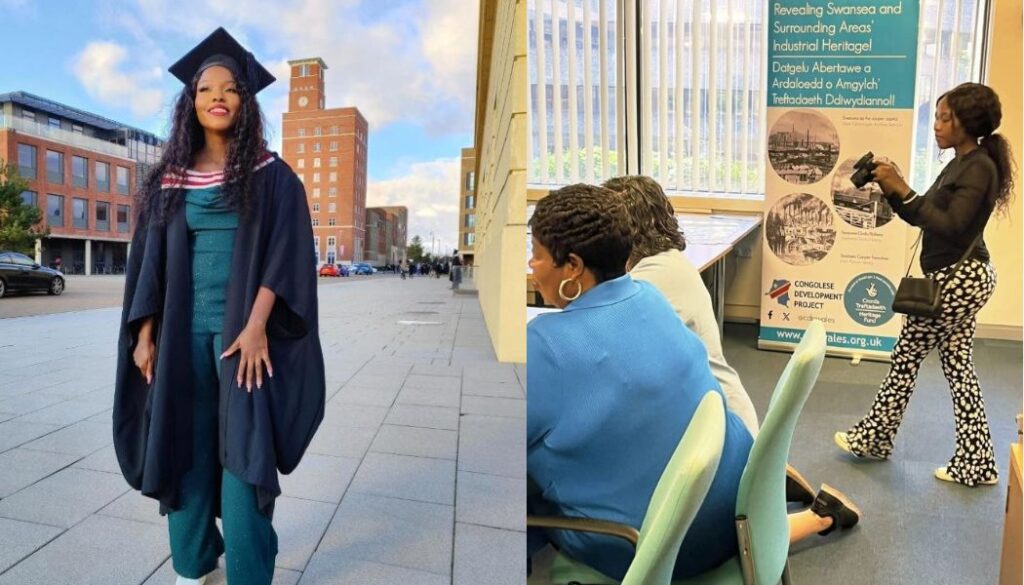
One of her most notable contributions is the large-scale bilingual visual artwork she created for the Industrial Heritage Exhibition at Swansea Museum in 2024. The piece, which layered archival and contemporary photography with English and Welsh text, was described by museum staff and visitors as the exhibition’s “visual anchor.” It offered a nuanced meditation on migration, labour and Congolese cultural memory, and demonstrated Chepchirchir’s ability to translate community narratives into striking visual compositions.
Her ongoing work with the Congolese Development Project (CDP) has also become a defining element of her artistic identity. Chepchirchir leads participatory photography workshops where participants shift from being subjects of documentation to co-authors of their own stories. The resulting collaborative artworks have been exhibited through professional cultural programmes, reflecting her commitment to ethical image-making and shared authorship.
Beyond physical exhibitions, Chepchirchir has expanded her practice into digital visual narratives, creating online participatory artworks where community members contribute text, illustrations and photographs. Her recent work with Women4Resources foregrounds accessible artistic methodologies—particularly alt-text as narrative poetry and multilingual storytelling—demonstrating how digital spaces can become inclusive cultural sites.
What makes Chepchirchir’s work particularly significant is the originality of her artistic voice. Her blending of accessibility, bilingual visual communication and co-creation introduces a new aesthetic vocabulary into community arts in Wales. While still early in her artistic career, she is showing clear trajectory toward influence within the UK’s Combined Arts sector.
Local cultural leaders note that her practice embodies “a rare ability to merge artistic intention with community authorship,” and that her work is “reshaping how diaspora narratives are represented in contemporary visual art.”
With exhibitions, participatory programmes and digital artworks already contributing to public cultural spaces, Sharon Chepchirchir is emerging as an important practitioner whose work signals a meaningful shift in how visual storytelling can be shared, experienced and co-created.