High Court declines to issue orders in case seeking to ban political party meetings at State House
High Court declines to issue orders in case seeking to ban political party meetings at State House
The High Court has declined to issue interim orders in a case seeking to bar political parties from holding meetings and activities at State House, directing instead that the matter be heard on its merits.
Justice Bahati Mwamuye made the ruling on Tuesday February 10, in a petition filed by lawyer Lempaa Suyianka, who argued that using State House and other public facilities for partisan political activities violates the Constitution and amounts to misuse of public resources.
Suyianka moved to court seeking a declaration that the conduct was unconstitutional and an order compelling the political parties involved to refund the State any public funds used to facilitate the meetings.
However, when the matter came before the court, Justice Mwamuye declined to grant conservatory orders restraining political parties from accessing the State House. The judge, however, directed that both the application for interim orders and the substantive petition be heard expeditiously.
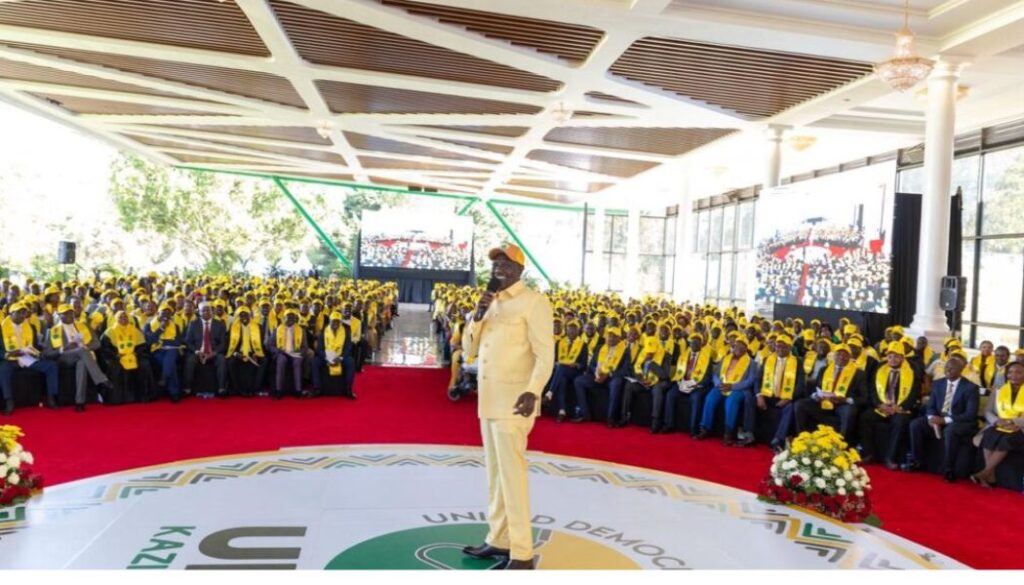
The development comes after President William Ruto recently met 12,353 UDA aspirants for the 2027 General Election at State House, Nairobi.
According to the State House, the aspirants included 149 aspirants for the governor position, 279 for Senate, 323 aspiring women representatives, 1,372 MPs, and 10,230 MCAs, in a move that elicited mixed reactions from Kenyans.
Initially, former Bomet Governor and Judicial Service Commission (JSC) Vice Chairperson Isaac Ruto came under intense scrutiny after attending the UDA National Governing Council meeting held at State House, Nairobi, in late January.
Prophet Owuor addresses viral WhatsApp conversation with ‘God’
DPP explains how five suspects allegedly executed the murder of MP Ong’ondo Were
Marijuana policy still on the table; Wajackoyah on 2027 presidency
Government warns against two agencies promising jobs abroad
His presence at the high‐level political event, which was chaired by President Ruto in his capacity as UDA Party Leader, sparked widespread debate over constitutional norms and the expected neutrality of members of independent commissions.
In response, a Nairobi lawyer filed a formal petition in Parliament and also wrote to the JSC seeking Ruto’s removal from the commission, citing alleged violations of constitutional principles and the undermining of public confidence in the judiciary’s independence.
Meanwhile, the JSC itself declined to act on internal petitions against Ruto, citing the sub judice rule and the existence of parallel legal and parliamentary processes addressing the matter.
In a separate case, Suyianka has also filed a constitutional petition in the High Court seeking orders to compel Parliament and related offices to disclose how much public money was spent on the 2025 National Prayer Breakfast and to stop the use of public funds for the 2026 edition of the event.
In the petition filed before the Constitutional and Human Rights Division in Nairobi, Suyianka sued the Parliamentary Service Commission (PSC), the National Assembly, the Senate, the Attorney General, and the Commission on Administrative Justice.
The petitioner contends that the respondents have violated his constitutional right of access to information under Article 35 of the Constitution by refusing or failing to disclose details of public expenditure relating to the National Prayer Breakfast.
Jalang’o declares Nairobi Senatorial bid in 2027 election to challenge Sifuna
Two relatives arrested over beating of 19-year-old to death
Governors vow not to appear before Senate over harassment and extortion
Governor Kihika fires back at Gachagua over attacks on her husband
Gates Foundation addresses releasing modified mosquitoes in Nairobi
Follow us