Tanzanian clarifies barring CNN Journalist Larry Madowo from Visiting
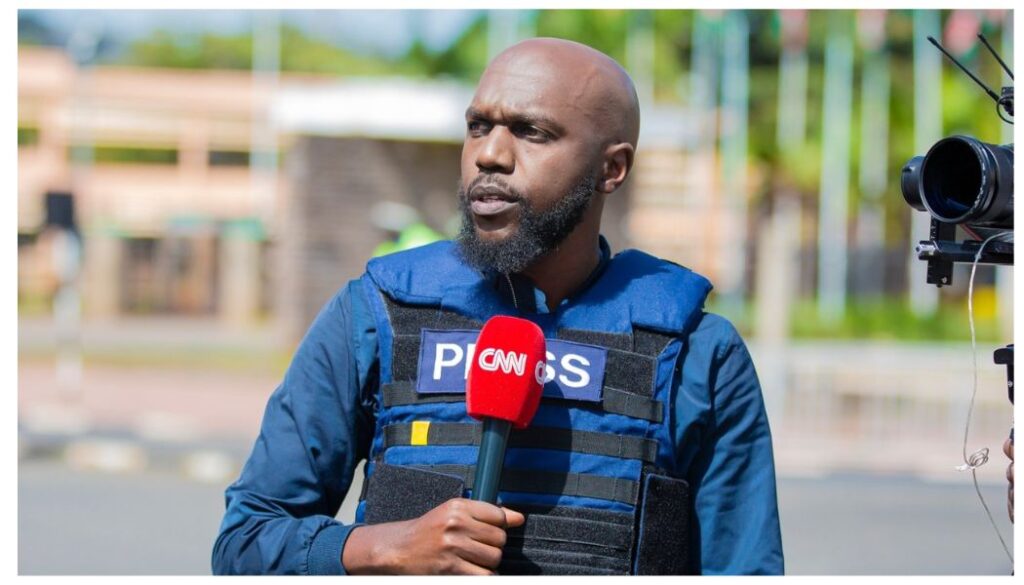
The Tanzanian government has denied that it blocked international journalists from reporting the events in the country during the October electioneering period.
The Tanzanian government has denied that it blocked international journalists from reporting the events in the country during the October electioneering period.
Tanzania has come under sharp criticism for shutting down the internet and putting up barriers for both the local and international media to air the happenings there.
CNN’s Kenyan-born journalist Larry Madowo has prominently spotlighted the events there.
The journalist crowdsourced for information from Tanzanians, arguing that the local authorities never okayed members of the press to report on the matters on the ground.
Speaking in a media interview, Tanzania’s Permanent Secretary in the Ministry of Information and government spokesperson Gerson Msigwa denied that the regime imposed a ban on international journalists, specifically Larry.
Msigwa explained that he is the one who oversees accreditation for journalists and that Larry was never blocked, nor did he seek permission to report from Tanzania.
Msigwa suggested that had Larry sought permission, he would not have been barred.
“CNN journalists have come to Tanzania before. The journalist said he was threatened and also denied permission to come to Tanzania. I am the one in charge of permitting journalists. He (Larry) did not ask to be allowed in,” Msigwa said.
He further took issue with Larry’s style of work, noting that it was wrong for him to have produced a documentary on the happenings in Tanzania without including the side of the government.
According to him, the production was unfairly unbalanced.
“I am a media practitioner. It is a journalist or a media outlet’s responsibility to balance their reporting. A prominent media organisation like CNN can’t proceed and air a serious report without featuring the side of the government,” he said.
Safaricom announces system update affecting purchase of KPLC tokens
Several people dead in grisly road accident along Nairobi-Mombasa Highway
Organisers of Beryl Odinga’s funeral never wanted me to speak; Babu Owino
ODM politician dies after short illness
The spokesperson noted that the government was observing everything done by Larry.
According to him, it was unprofessional for the journalist to use information sourced only from members of the public without granting the government its right of reply.
“We have seen everything going on. He asked Tanzanians to send him videos and photos for him to report on what is happening. I would like to ask, when reporting on matters, do you only rely on messages sent via WhatsApp?” he posed.
Msigwa called on Larry to be professional in his undertakings, suggesting that the government was ready to give out information, but only through the right approach.
“I have no problem with what Larry reported on. He, however, should have included the government’s side. You can’t go with one side in a report. Had he approached the government, we would have cooperated with him,” Msigwa said.
CNN, besides the information crowdsourced from the Tanzanian public, also used satellite imagery and geolocation to spotlight a likely massacre in the country.
Unarmed civilians were seen being killed by state police unprovoked, with there being hints of mass graves in north Dar es Salaam.
According to Larry, CNN had sought the government’s voice but got no response.
KDF soldier dies by suicide at his Butula rural home in Busia
Veteran KBC journalist Festus Amimo is dead
Eyewitness details how MP died near his Karen home
Beryl and Raila had an argument the last time they met while he was alive; Winnie Odinga
Follow us