Win for MPs as Court of Appeal issues ruling on NG-CDF
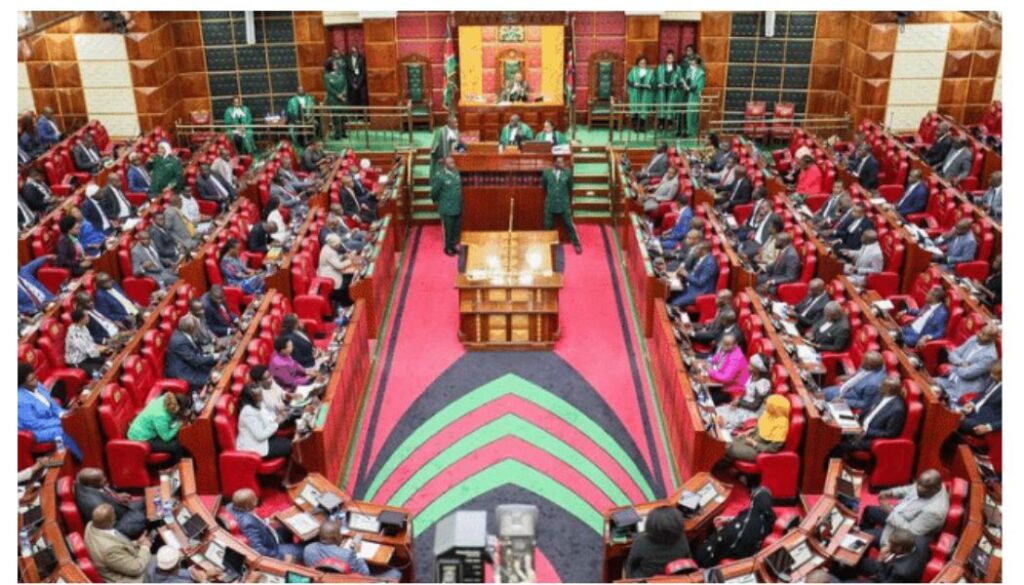
Court of Appeal overturned a High Court decision that had invalidated the National Government Constituencies Development Fund (NG-CDF) Act, 2015.
Members of Parliament have secured a major victory after the Court of Appeal overturned a High Court decision that had invalidated the National Government Constituencies Development Fund (NG-CDF) Act, 2015.
The appellate ruling, delivered by Justices Daniel Musinga, Francis Tuiyott, and Aggrey Muchelule on Friday, January 6, reinstated the law but struck out a specific provision found unconstitutional.
“We determine that the High Court was wrong in invalidating the entire NGCDF Act, 2015. In its place, we find the petition before the High Court was not rendered moot by the 2022 and 2023 amendments of the NGCDF Act, 2015,” the ruling read.
On the question of devolution and whether the NG-CDF framework interferes with county government functions, the appellate court firmly disagreed with the High Court’s position.
The bench also examined whether the law breaches the constitutional doctrine of separation of powers.
Professor robbed of Sh950,000 after bank visit
Gaucho explains his relationship with Mama Ida Odinga
High Court issues fresh orders affecting AI use in Kenya
Ruth Odinga defends Sifuna, insists Ruto gov’t sponsoring ODM rallies
“Contrary to the finding by the High Court, the NGCDF Act, 2015 does not violate the principles and structure of devolution, or offend the division of functions between the national and county governments.
“Contrary to the finding by the High Court, except for its section 43(9), the NGCDF Act, 2015 does not violate the doctrine of separation of powers,” the ruling added.
The involvement of the Senate in passing the law was another key issue in the appeal, but the three judges concluded that the legislation did not require Senate participation.
“Contrary to the finding by the High Court, the process of enactment of the NGCDF Act, 2015 did not require the involvement of the Senate,” the ruling further read.
The judges, however, found fault with part of Section 43(9), ruling that tying the term of a fund manager to the term of Parliament was unconstitutional.
“Contrary to the finding of the High Court, the NGCDF Act, 2015 was not inconsistent with the principles of public finance; the remedy of striking down the entire NGCDF Act, 2015 was disproportionate and inconsistent with the principle of severability; and section 43(9) of the NGCDF Act, 2015 was inconsistent with the principle of separation of powers, and therefore unconstitutional, and the part of the provision that provides that the term of the manager shall be cojoined with the term of Parliament and during transitions occasioned by general elections or a by-elections is hereby severed from the Act,” the ruling concluded.
In conclusion, the Court of Appeal set aside the earlier High Court ruling and made no order as to legal costs, terming the case a public interest matter.
High Court orders IG Kanja to produce missing businessman
Two miners suffocate to death inside gold mine in Migori
ODM rejects Uhuru-led Azimio leadership changes, says Oburu Oginga was not consulted
Aliko Dangote buys Kenyan company for KSh4 billion
IEBC appoints Moses Ledama Sunkuli as acting CEO
Follow us