Controller of Budget warns Kenya against overreliance on IMF funding
Controller of Budget warns Kenya against overreliance on IMF funding
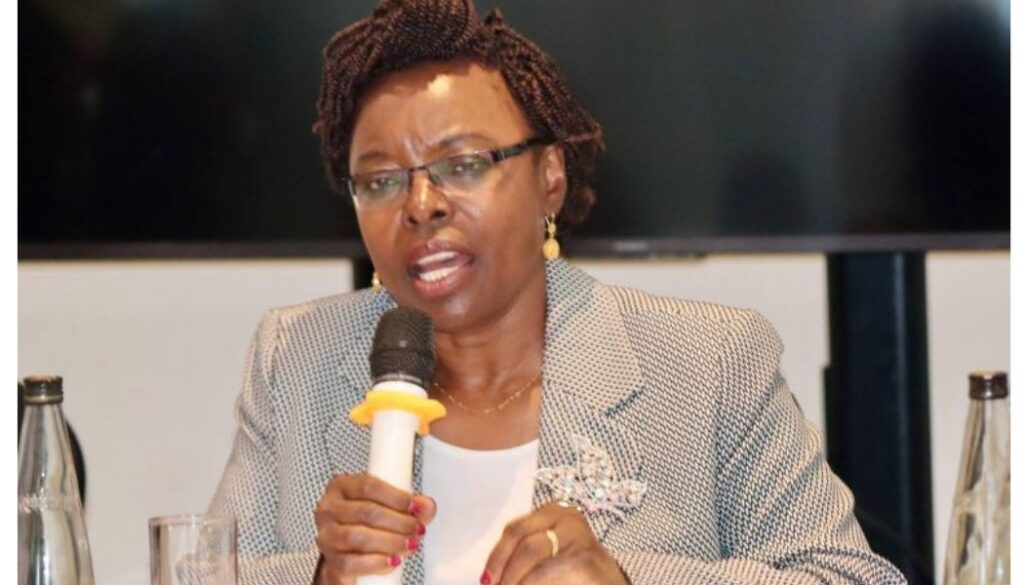
Kenya’s pursuit of a fresh funding arrangement with the International Monetary Fund (IMF) has drawn caution from Controller of Budget Margaret Nyakang’o, who says the country must avoid placing its economic direction in the hands of external lenders at the expense of accountability and local reforms.
Nyakang’o called on the government to diversify its sources of budget support, warning that heavy dependence on the IMF could leave the country exposed once programmes expire.
She questioned the push to operationalise the National Infrastructure Fund through the Government Owned Enterprises Act, arguing that the law raises serious concerns about transparency and oversight.
The Government-Owned Enterprises Act requires State entities to operate as commercial ventures that generate profit and sustain themselves financially.
The law formed part of reform measures agreed upon under IMF-backed arrangements for State corporations. But Nyakang’o cautioned that such programmes come with strict terms that can reshape fiscal policy in ways that strain the country.
“So, we should not just be puppets; we need to look at this realistically,” the CoB said.
She pointed out that IMF support often demands quick fiscal adjustments, including tighter spending controls. According to her, the structure created under the GOE Act weakens independent checks on public resources.
“GOE Act, as we noted, bypasses Parliamentary scrutiny as well as that of my office and therefore, weakens public oversight” Nyakang’o added.
Under the new framework, affected enterprises are registered as limited liability companies under the Companies Act rather than being formed under specific legislation.
This allows them to operate outside the usual government systems and annual budget approvals, enabling them to mobilise funds for long-term investments. Public accountability for these entities is channelled through the National Treasury.
‘We’re masters of politics’, Kindiki dismisses ODM push for DP seat
WHO condemns planned US-funded infant vaccine trial in Guinea-Bissau
EPRA announces three main changes in electricity billing
U.S. Embassy to be closed on Monday
Fuel prices drop as EPRA issues latest review
The IMF has consistently encouraged reforms aimed at reducing the financial strain caused by struggling State corporations. Passing the GOE Act was viewed as a key signal as Kenya opened talks on a successor programme after the expiry of its Sh464.47 billion, or $3.6 billion, facility in early 2025.
Implementation of the law began on February 2, 2026, but it was halted until February 23, 2026, after the High Court issued conservatory orders in response to a petition filed by the Consumers Federation of Kenya.
The case challenged elements of the Act, temporarily stalling its rollout.
In addition to business operations, Government Owned Enterprises may also undertake public service roles. Previously, establishing, merging or dissolving a State corporation required parliamentary approval through legislation.
The new law grants the Cabinet authority to make such decisions with minimal direct involvement of lawmakers.
Nyakang’o maintained that as Kenya moves toward a new IMF agreement, it must confront credibility and execution gaps that continue to affect public finance management.
She warned that these weaknesses squeeze funds meant for social programmes, slow development efforts and fuel public frustration when economic hardship deepens.
Russia killed opposition leader Alexei Navalny using dart frog toxin, UK says
Mombasa police Commander refutes claims of giving shoot to kill order
Kigen posted to Nyeri, Isaack to Nakuru as Judiciary deploys appellate judges
Woman’s decomposed body found in Nyeri bush
DCI issues caution to Kenyans on Valentine’s Day
Follow us