TSC begins nationwide mass teacher transfers
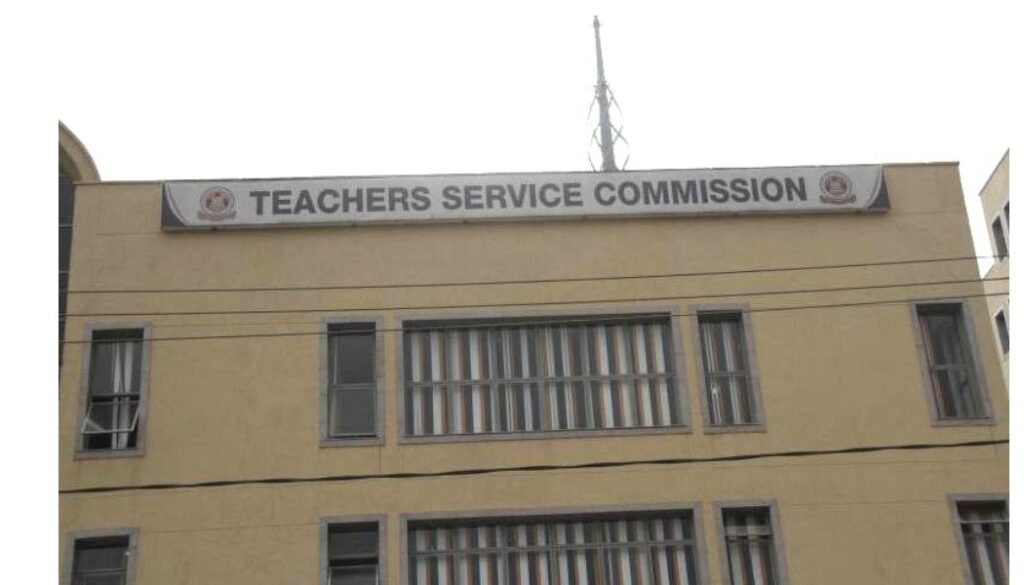
The Teachers Service Commission (TSC) has triggered a nationwide teacher transfer exercise ahead of the second term reopening.
The Teachers Service Commission (TSC) has triggered a nationwide teacher transfer exercise ahead of the second term reopening.
The move is not a routine administrative shuffle but a calculated data-driven intervention aimed at correcting long-standing disparities that have left some schools overstaffed while others remain critically understaffed across the education sector, as per TSC.
The commission acknowledges that for years, unequal distribution of teachers has seen urban and easily accessible schools enjoy surplus staffing, while remote and hardship areas continue to struggle with severe shortages affecting learning outcomes and classroom delivery across the country.
The focal point of this distribution exercise is the County and Sub-County transfer panels tasked with applying a comprehensive balancing matrix developed from detailed data submitted by school heads in the country today.
The matrix uses key indicators such as enrolment figures, the number of classes, teacher establishment, gender distribution, and existing surplus or shortage levels to systematically map staffing needs at the school level and within the nationwide implementation process.
Using the matrix formula, assuming there are 300 pupils in a school, it will require seven teachers, six classroom teachers, and 1 headteacher, in every primary school.
With this formula, it implies that Junior Secondary Schools (JSS) with 300 learners will be allocated a minimum of seven teachers by formula, but ground realities push actual deployment to between nine and twelve, covering Math, English, Kiswahili, Science, Social Studies, and Pre-Technical subjects.
Catholic bishops raise alarm over ‘goonism’ and political insults
Tanzania detains Kenyan vessel, MV Sea Mfalme
South African opposition leader Julius Malema sentenced to 5 years in prison
COFEK moves to court over ‘cancer-causing’ chemicals in Kenyan fuel
Unlike primary schools, where teachers handle multiple learning areas, Junior Secondary Schools (JSS) operate on a subject-specialised model, with teachers assigned to specific disciplines such as Mathematics, Languages, and STEM Sciences under the Competency-Based Education (CBE) framework.
Additionally, senior schools will have no fixed number of teachers; instead, they will rely on subject specialists, estimated at 15 to 20 teachers per 300 learners, drawn from STEM, Humanities, Languages, and Technical and Arts disciplines to meet curriculum demands.
This implies that the TSC’s core strategy moves teachers from overstaffed to understaffed schools, closing subject gaps and ensuring every learner, regardless of location, has a qualified teacher in every subject.
In future, the transfer criteria will also go beyond headcounts and conduct precise subject-based analysis to ensure each school receives what it lacks without destabilising the sending institution.
The matrix will use key indicators such as enrolment figures, number of classes, teacher establishment, gender distribution, and existing surplus or shortage levels in the system.
IEBC to add 16 countries to diaspora voting list ahead of 2027 polls
Helicopter carrying eight loses contact in Indonesia
You gave Ruto an opportunity to cannibalize ODM; Sifuna over zoning row
TSC halts Kewota deductions from teachers with immediate effect
Follow us