Ruto signs 2026 Finance Bill into law
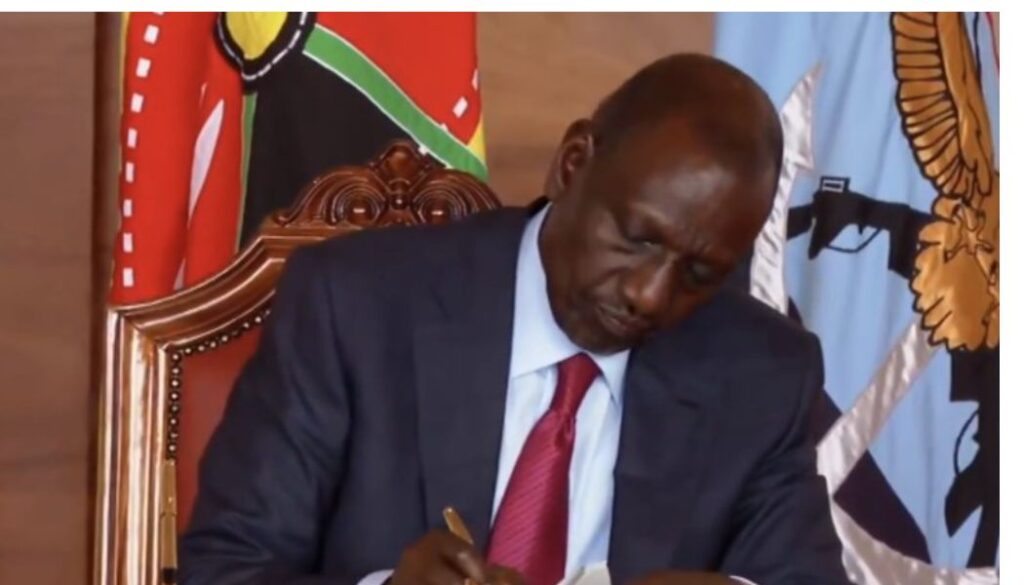
President William Ruto has assented to the Finance Bill 2026, officially turning it into law and paving the way for the implementation
President William Ruto has assented to the Finance Bill 2026, officially turning it into law and paving the way for the implementation of the government’s financial plan for the 2026/27 financial year.
The President signed the Bill into law on Tuesday, June 23, during a ceremony held at State House, Nairobi, bringing to an end the legislative process that began with its tabling in Parliament earlier this year.
The Bill was passed by the National Assembly on June 18 during its Third Reading, after lawmakers voted to approve the proposed measures.
However, only 162 out of 349 MPs participated in the final vote, with 186 lawmakers absent from the crucial session entirely.
Of the 122 “Yes” votes, 103 were electronic and 19 manual, while the 40 “No” votes comprised 36 electronic and four manual ballots.
This low turnout, one of the lowest since the controversial Finance Bill 2024 attracted public backlash, saw key champions of fiscal justice like Kiharu MP Ndindi Nyoro missing.
Government plans to deploy goons and criminal gangs ahead of June 25 Protests; Gachagua
Gachagua hits out at Kindiki over his claim that ‘Tutam’ is ‘constitutional’
Edwin Sifuna to challenge his second removal as ODM SG
Edwin Sifuna is a hypocrite; Miguna Miguna
The bill, in and of itself, has ignited fierce debate among lawmakers, business groups, and citizens, with several clauses drawing criticism for their anticipated impact on living costs and business operations across Kenya.
Landlords and tenant groups oppose the rental income tax hike from 7.5 per cent to 10 per cent through the bill, warning that the 33 per cent increase will be passed directly to tenants, worsening an already strained housing affordability crisis.
Business associations, including COFEK, have moved to court challenging the proposed shift of the tax filing deadline from June 30 to April 30, warning the compressed window risks penalising compliant taxpayers.
Critics warn that taxing digital and merchant service fees threatens Kenya’s progress toward a cashless economy, while the proposed mitumba import tax threatens millions of low-income earners who depend on affordable second-hand clothing for their daily needs.
Government disbursement of first 448 million to families of protest victims
Ruto directs immediate salary increase for all civil servants
High Court accepts CS Duale’s apology, discharges him with a warning
Senate orders the arrest of Governor Kihika
Follow us